


A year, in the order it happened
One metabolic private practice, anonymised at its own request, ran a year of its work through auro. This is what happened, in the order it happened. The five figures on this page are the five the practice can point at on its own ledger. Everywhere else we have written the thing in words, because a retrospective that reaches for a number it does not have is an advertisement.
Chapter one
The practice arrived in three pieces
The patients were in one system, the claims were in another, and the stockroom was a clipboard on the back of a door. Nobody thought of that as a problem. It is simply what a small practice looks like after a few years of solving each quarter with whatever was available that quarter.
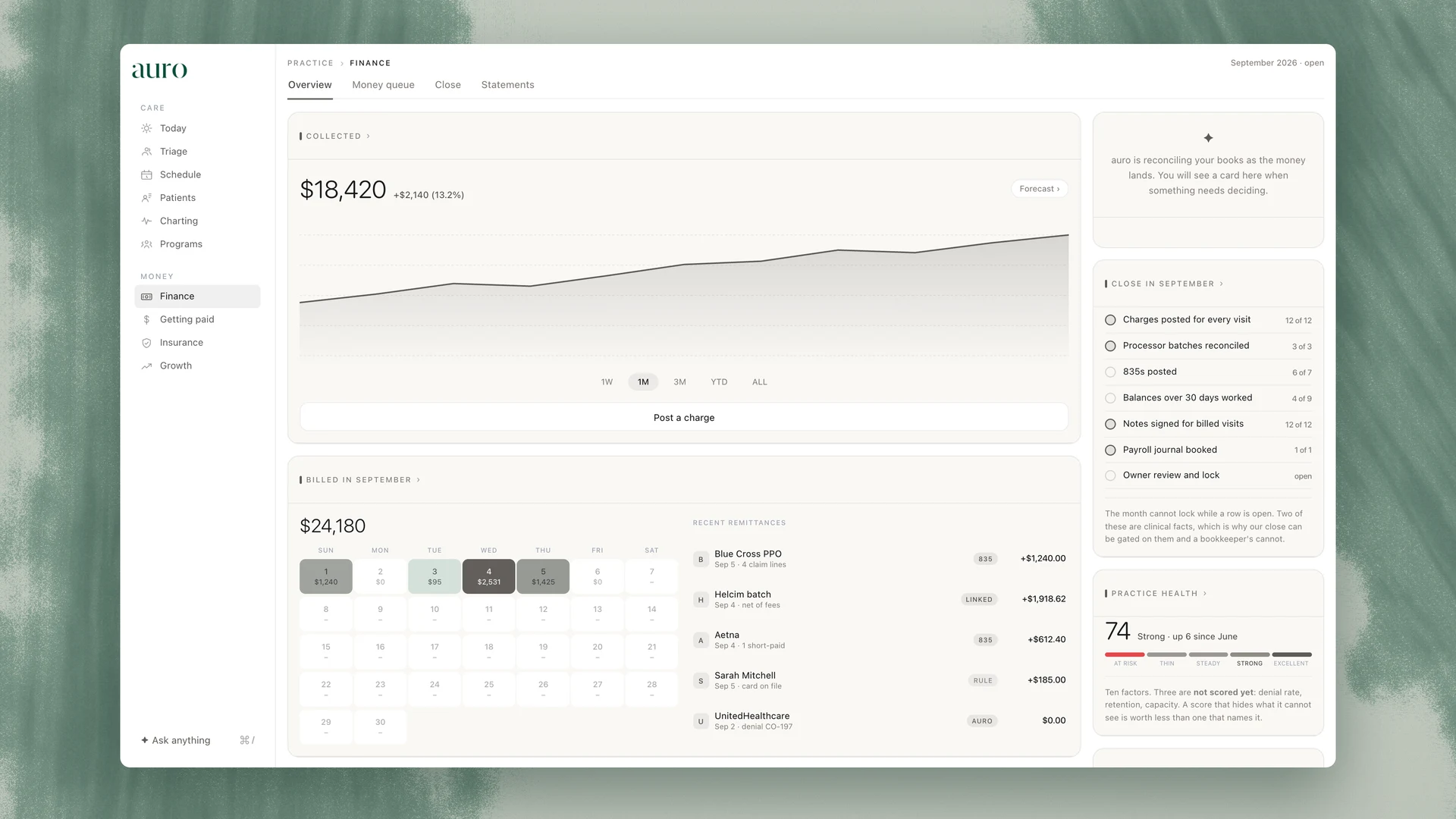
The first week on auro was not a migration so much as a reconciliation. Every patient became one record: the chart, the coverage, the ledger line and the shelf draw, all hanging off the same person. Where the three systems disagreed, auro said so and left the disagreement on the screen for the owner to settle. It did not pick a winner. That is the first thing the practice learned about the software and, from what they have told us, the reason they kept using it.
Chapter two
The phone stopped being somebody’s whole morning
Eligibility was the job nobody wanted. It is also the job that cannot be skipped, because an unverified visit is a claim you are guessing at. Before auro it was a person, a headset and a morning.
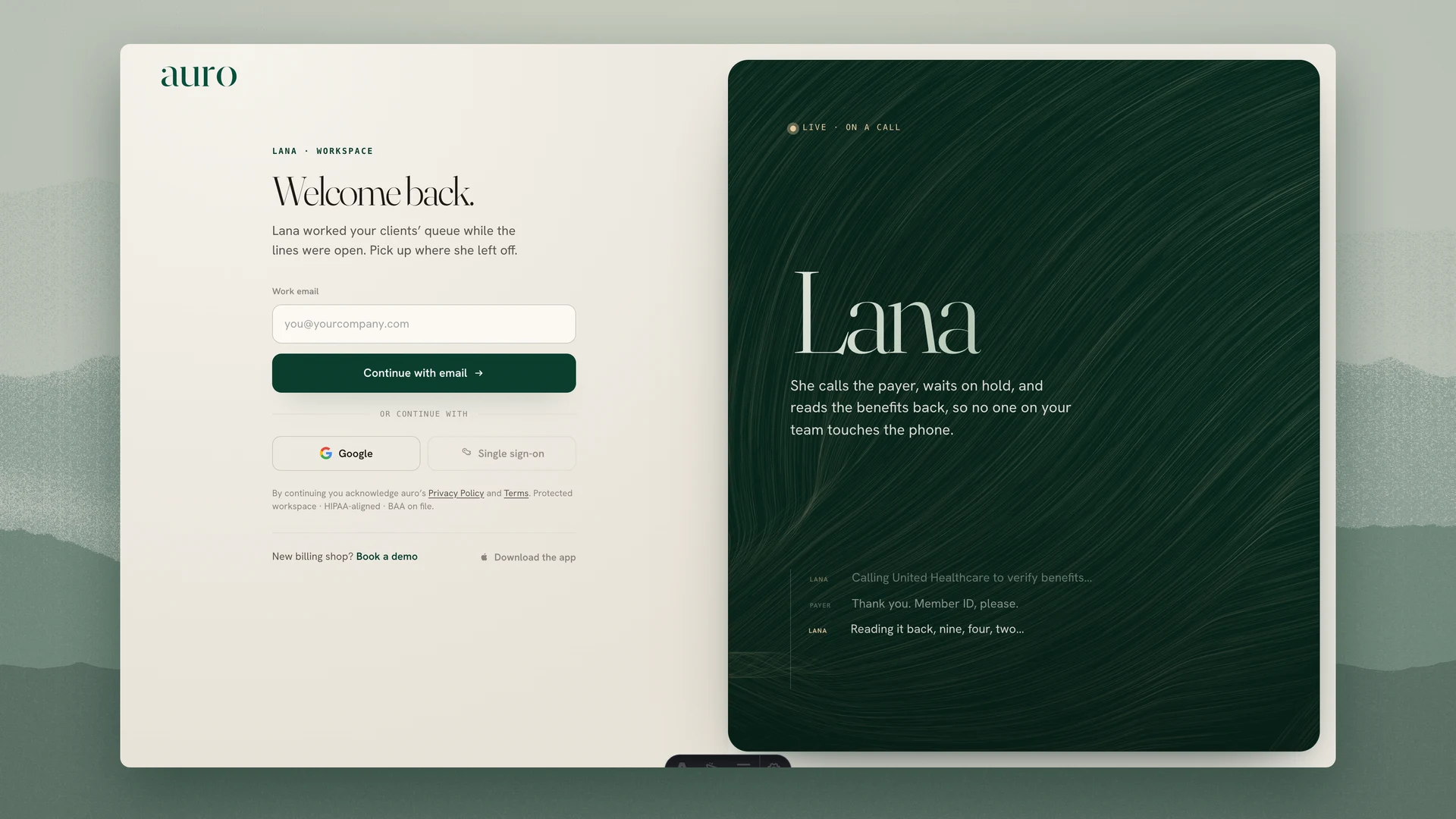
Lana took the calls. She dials the payer’s provider line, gets through the IVR, waits on hold, gives the practice’s NPI and tax ID, reads every identifier back digit by digit, asks her questions in the order a seasoned biller would, and asks for the call reference before she hangs up. The average call across the year ran 41 seconds from pickup to reference number. The longest conversation with a live representative ran 12.6 minutes, and it is on the record with its recording, because the long ones are the interesting ones.
The number the practice checks most often is not either of those. It is the count of answers Lana invented, which is 0. When a representative is unsure, when a system is down, when a plan has a benefit nobody can find, she files a flag and says why. A flag costs a person two minutes. A confident wrong answer costs a claim and a patient’s trust.
Chapter three
The note was waiting before the parking lot
Charting is the tax a clinician pays at the end of a day that was already long. The practice was writing notes in the evening, which meant writing them from memory, which meant writing them thin.
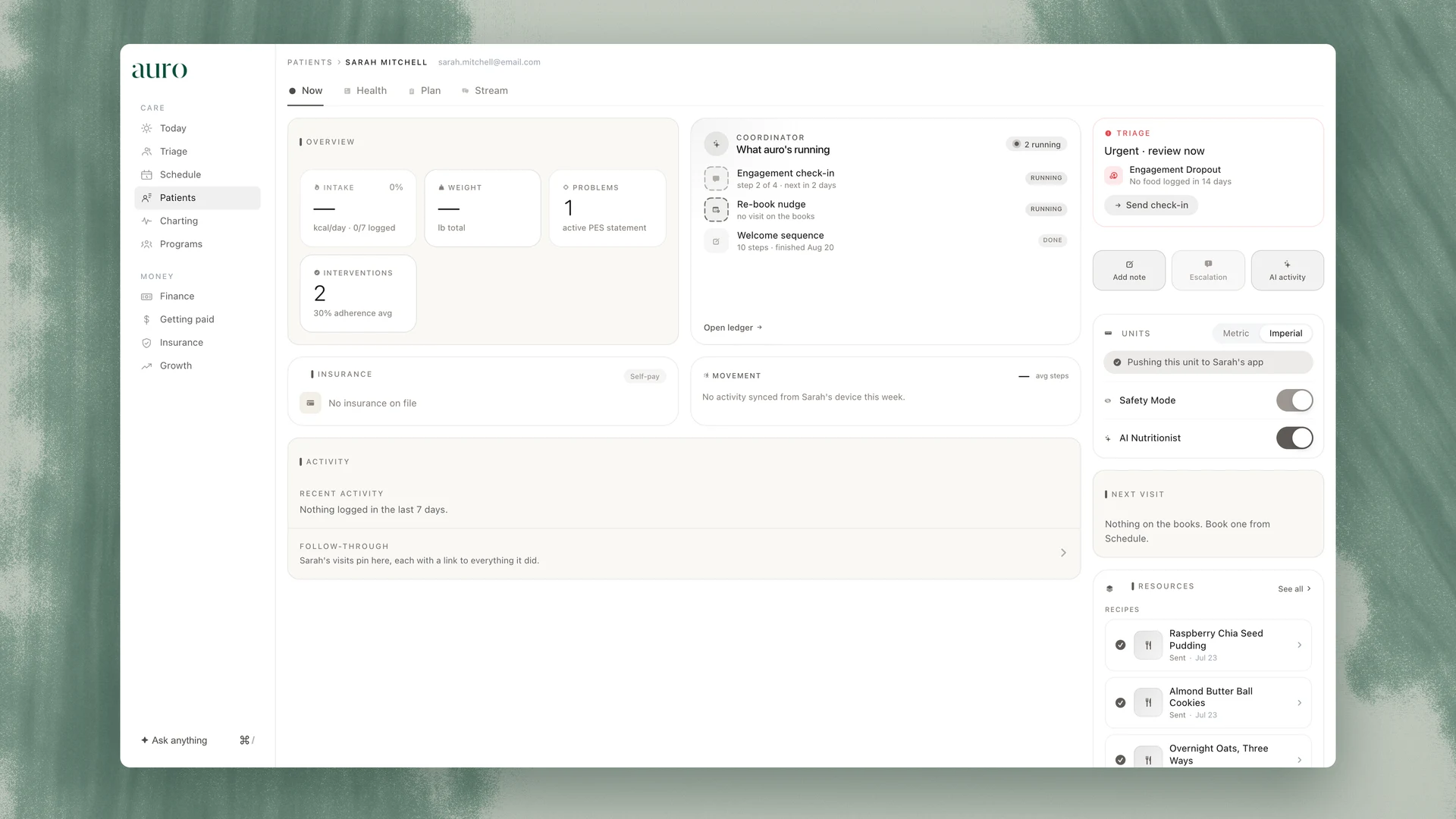
With consent stamped on the visit, the session is recorded and the note is drafted while the patient is still putting a coat on: the history, the intake, the PES statement, the plan, the codes. The dietitian reads it, changes what is wrong and signs it. Nothing is filed that a clinician has not read, and the draft is never the record until somebody puts their name on it.
In the September close, every billed visit had a signed note behind it: 12 of 12. That is a small number and it is the right size of number. A practice does not need a signing rate across thousands of visits to know whether its notes are finished. It needs this month to be clean.
Chapter four
The claim left the night of the visit
Claims used to go out in a batch, on a day of the week, after somebody had time. Every day between the visit and the claim is a day the payer has not started counting, and a day in which the detail that would have answered a denial gets further away from the person who remembers it.
Now the claim is assembled from the note, scrubbed against the code rules, and sent the same evening. The remittance comes back onto the same ledger line it left from, so a payment is never a mystery deposit to be matched by hand later.
Across the year, 98% of claims were paid on first pass. The practice is careful about how it says that: first pass is a measure of the practice and the payer together, not a property of the software. What the software changed is that the 2% arrive as a named exception with the verification, the reference number and the recording already attached, instead of as a letter nobody can explain.
Chapter five
The shelf learned the calendar
The apothecary ran the way most do: somebody noticed a gap, somebody ordered, the box arrived late, and a visit moved. Ordering was driven by whoever last opened the cupboard.
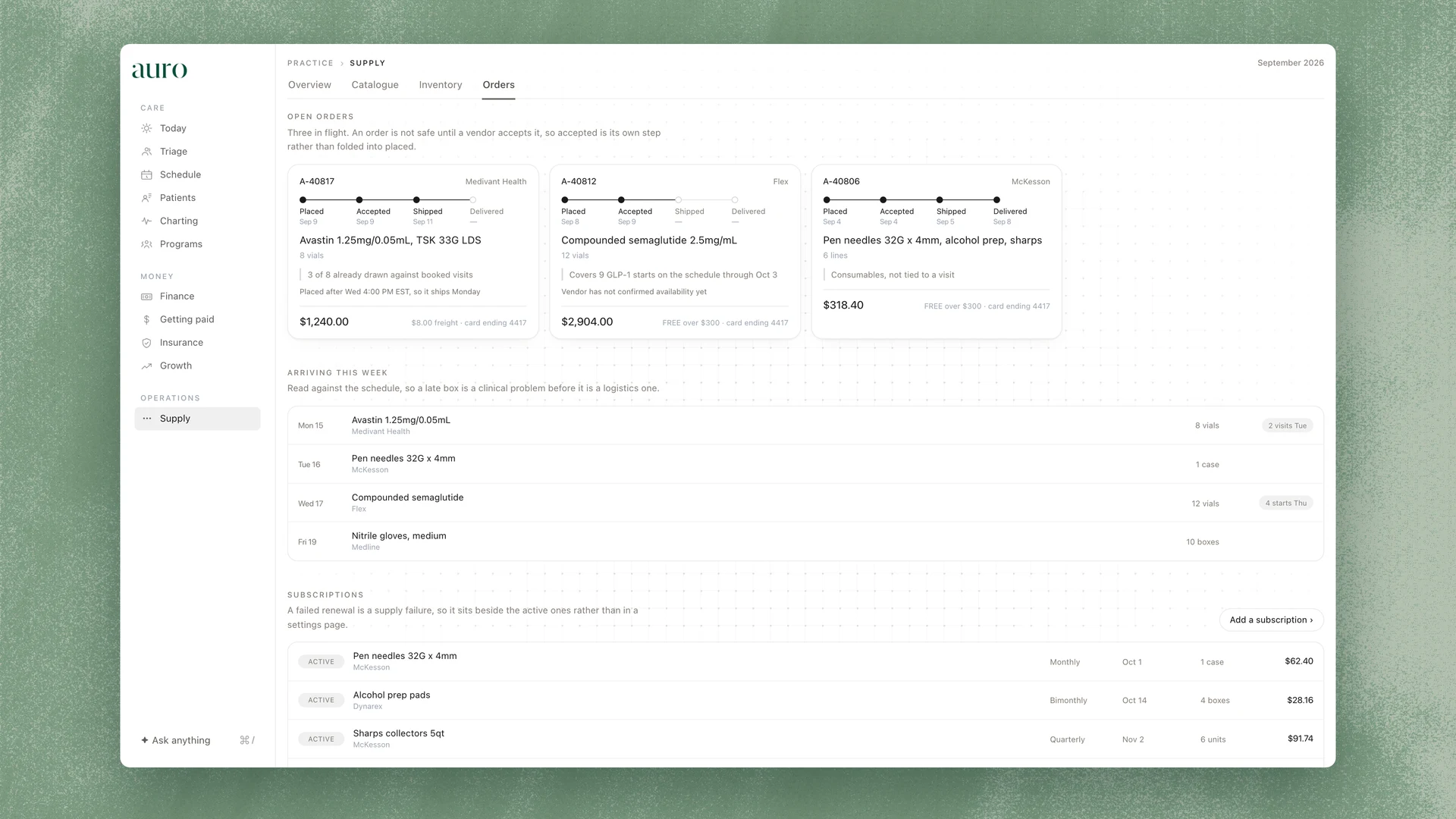
auro reads the booked week instead. The schedule predicts the draw, the draw sets the reorder point, and the purchase order is drafted before the gap exists. When the box arrives, the order, the packing slip and the invoice are matched three ways and the cost lands on the ledger against the visits that will consume it.
We have not published a figure for this, because a year is not enough calendar to say how well a booked week predicts a stockroom, and we would rather say that plainly than dress up one season as a finding. What the practice will say is that it stopped moving appointments because of a late box.
Chapter six
The patient had somewhere to put the day
A care plan that lives in a printout is a care plan that is reconstructed from memory at the next visit. The practice wanted the plan to be alive between visits, and it wanted the logging to be light enough that people would actually do it.
Meals go in by voice or photo, water and weight go in with a tap, and the plan is on the phone in the morning rather than in a folder. The streak is forgiving on purpose: a person who misses a Tuesday is not punished into quitting on Wednesday.
84% of the practice’s patients logged every day. That number belongs to the patients, not to us, and it is the one on this page we are least willing to generalise from. It is what one practice’s people did with one practice’s encouragement.
Chapter seven
The close became an afternoon
The month used to end in a spreadsheet and a bad evening. Closing was a search: for the visit that was never billed, the payment that was never posted, the note that was never signed.
A close on auro is 37 checks. Each one is a question with a yes or a no and a list behind it when the answer is no: every billed visit has a signed note, every claim has a remittance or an age, every payment sits on a line, every received box has an invoice, every refund has a reason. The software runs all 37 and shows the owner only what failed.
The September close was reviewed and locked in an afternoon. The 37 checks are not a score and the software does not grade the month. It finds the exceptions and hands them to a person, which is the only honest division of labour between a piece of software and somebody whose name is on the practice.
The five numbers the practice can point at
Each one is on the practice’s own ledger or in its own recordings. None is projected, averaged across practices, or adjusted.
41 s
average verification call, on a real payer line
98%
of claims paid on first pass
37
checks in the monthly close
84%
of patients logging every day
12 of 12
notes signed for billed visits in the September close
A sixth number matters more than any of these and does not fit in a tile: across every payer call in the year, the number of answers Lana invented is 0. Where she was not told something, the visit came to a person with the reason attached.
The ledger of what is not here
What we still do not know
How well the booked week predicts the stockroom over more than one season. Whether a first pass above 98% is the practice’s doing or its payers’. What each payer’s hold time really is, as a distribution rather than an average. These are on the research page as questions, and they will stay questions until there is enough record to answer them.
What we will not put on this page
A projection. A multiple. A figure from a practice that has not agreed to it. A number we could not walk you back to a row on a ledger. If a claim about auro is not on this page, assume we could not support it yet.
Whose year this was
The practice’s. auro made the calls, drafted the notes, sent the claims, watched the shelf and ran the checks. A dietitian signed every note, an owner locked every close, and a person answered every flag. That is the arrangement, and year two does not change it.