

Every item, priced at every vendor that stocks it.
The catalogue is everything the practice has ever ordered: what is on hand right now, what it costs at each vendor that stocks it, which visits will draw it down, and whether the cheaper row is the same item or a substitute.
Runs on Savoir, auro’s model for the price watch and the reorder point. →Book a demo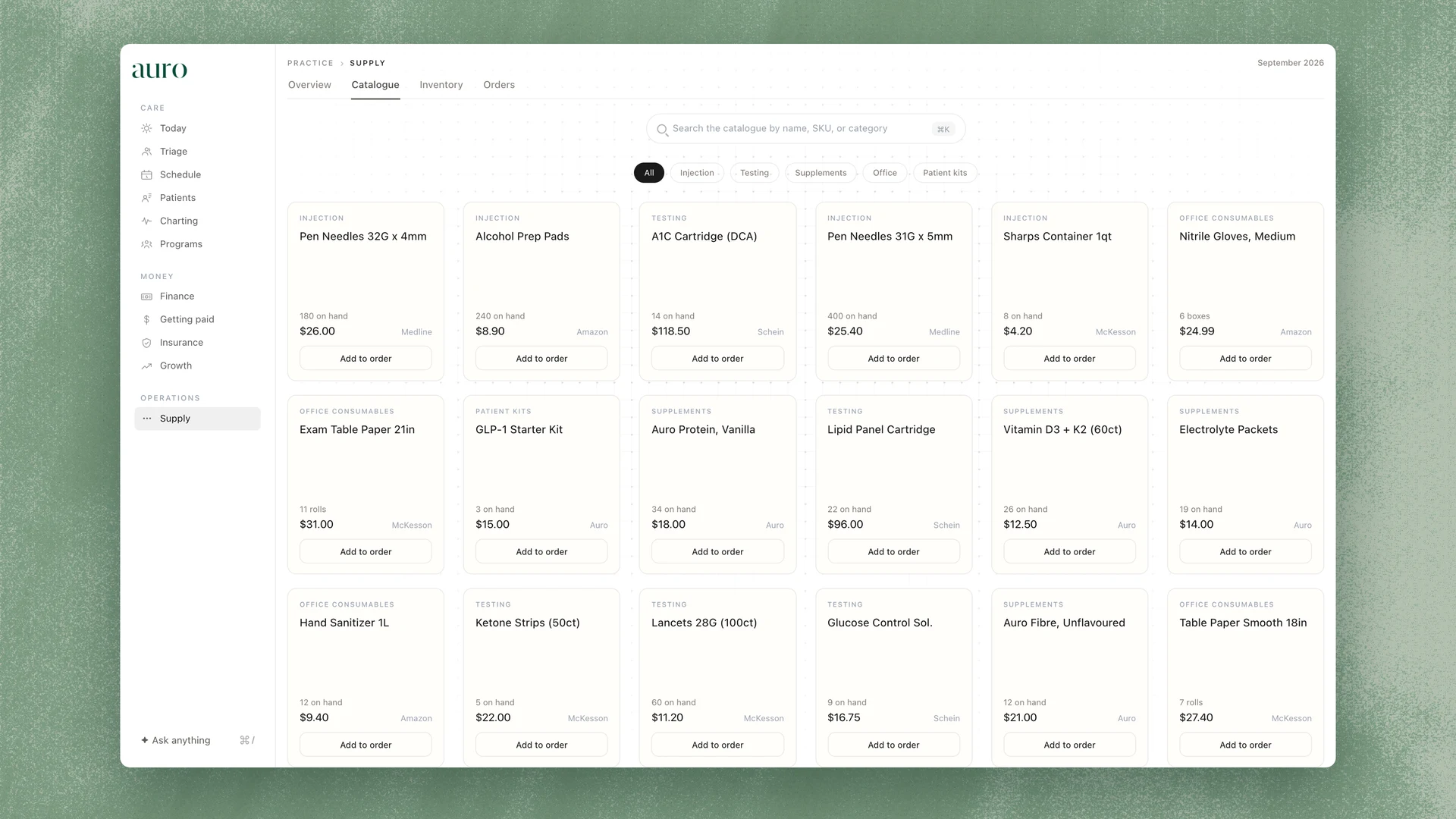
1,240 items across five vendors, with the price watched on every one of them.
Every row carries:
The on-hand count, from real dispensing
The reorder point it is measured against
The runs-out date, read against the schedule
The best price, and the vendor holding it
The landed cost, with freight and tax
Same item or substitute, labelled
The visits that draw it down
Its mode: reorder, suggest, or alert only
Every item the practice has ever ordered
The shelf is a table, not a memory. Each row carries what is on hand, what it costs at every vendor that stocks it, whether the cheaper row is the same item or a substitute, and which visits will draw it down.

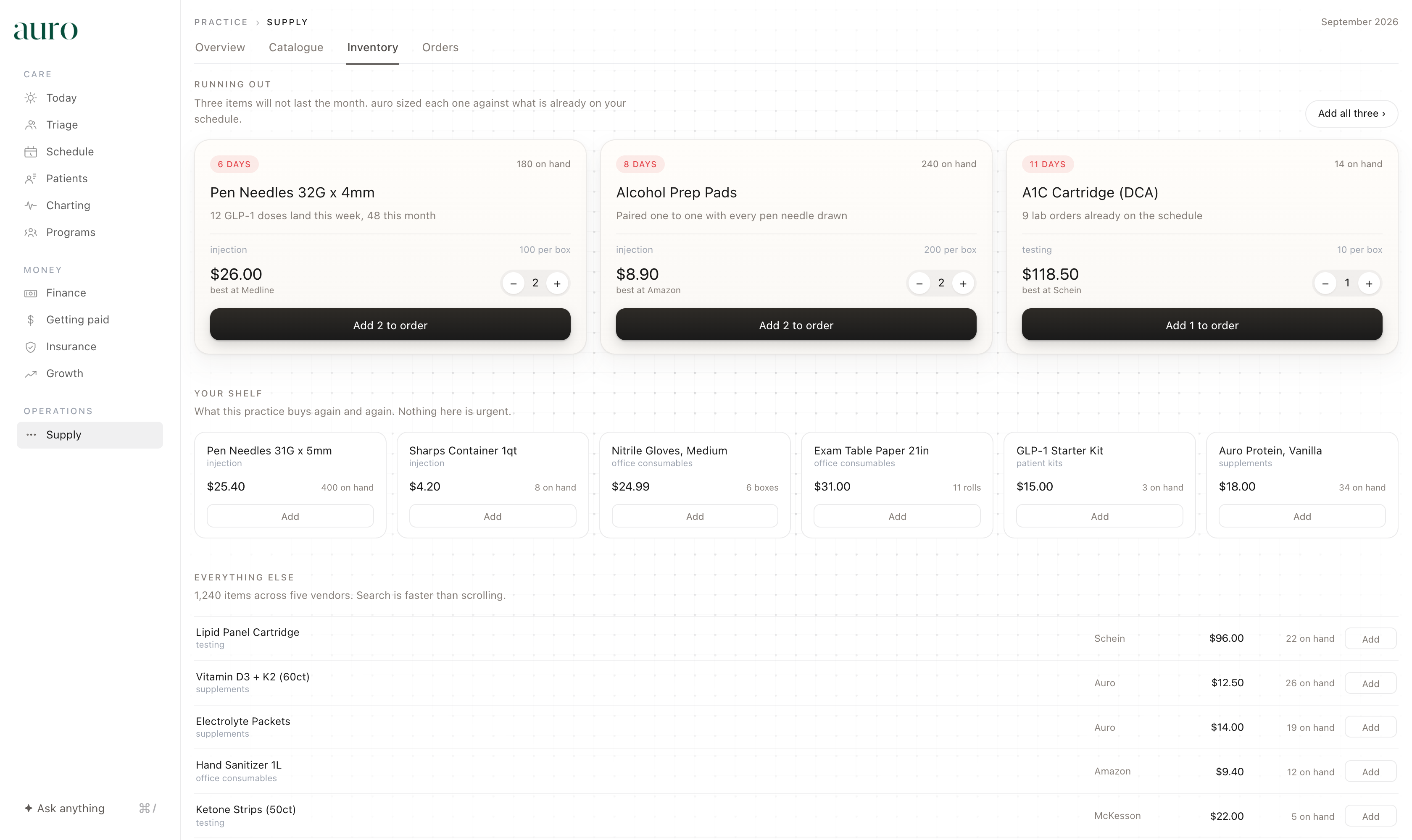
On hand
Counted in at receiving and drawn down by real dispensing, so the number is the shelf and not a guess. A hundred and eighty pen needles, fourteen A1C cartridges, thirty-four tubs of protein, each with its reorder point beside it and a bar showing how close the two are.
Priced at every vendor that stocks it
The same pen needle at Medline, Henry Schein, McKesson and Amazon Business, side by side, with the best price named and the vendor holding it. auro Direct items are marked sole source rather than made to look like the winner of a comparison that never happened.
Same item, or a substitute
A cut on the identical item and an equivalent from another label are two different rows, labelled as such. Distribution is a thin business and the margin is in the house brand, so a headline saving is frequently a brand swap. auro shows which one it is and lets the practice decide.
The visits that draw it down
Pen needles pair one to one with every GLP-1 dose on the schedule, alcohol prep pads one to one with every needle, A1C cartridges with every lab order, starter kits with every new patient, gloves at two and a half a visit. The draw is printed per item, because it is the reason the reorder point moved.
A price you can act on, and a shelf that reorders itself
A lower unit price with a second freight charge underneath it is worth less than nothing. The catalogue compares what the box will actually cost, and the items the practice dispenses on every plan reorder themselves at that price.

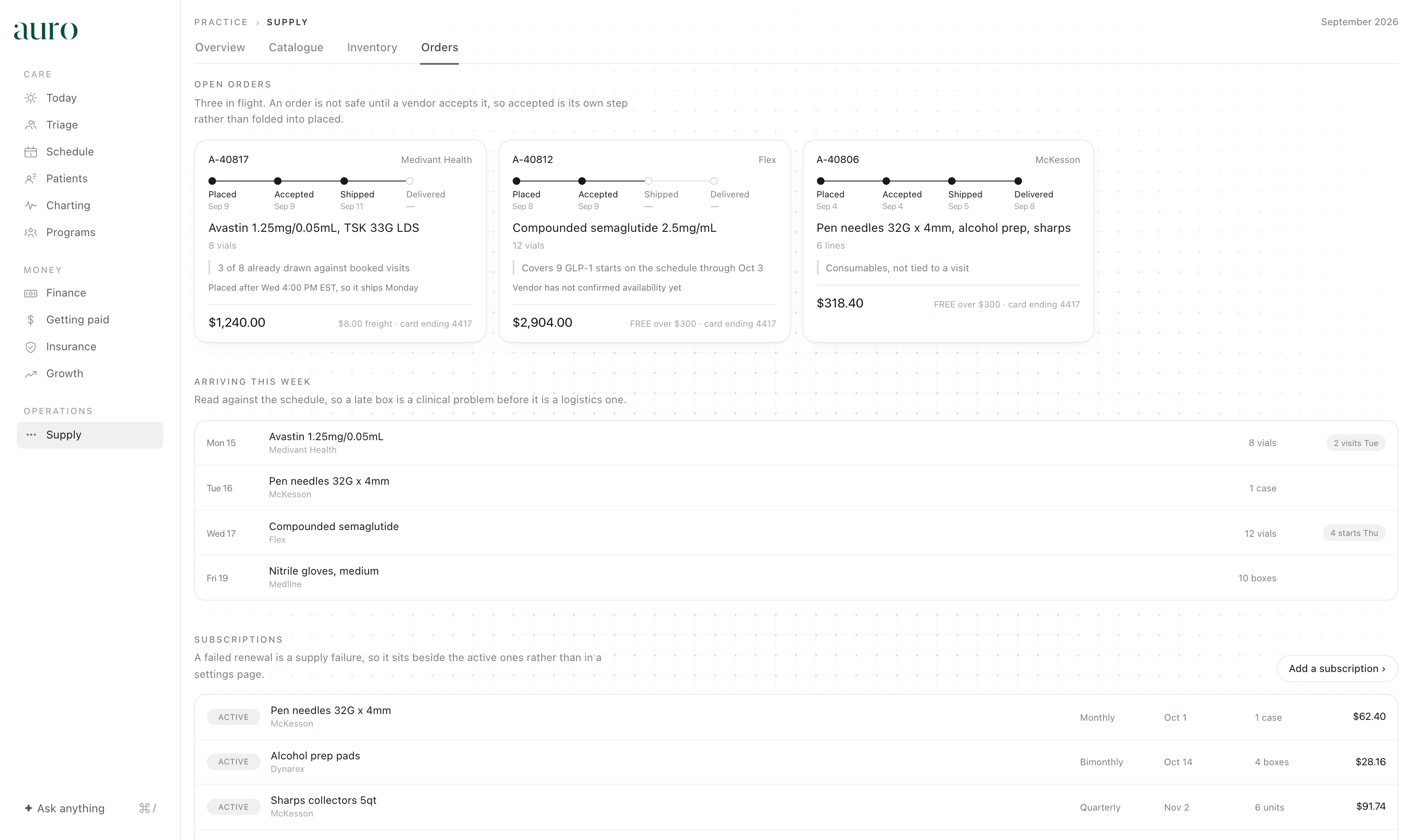
Landed cost, not unit price
Freight, tax and the vendor’s own free-shipping threshold are carried into the comparison, so the row the practice reads is what the box will cost when it is standing in the hallway. A cheaper unit price that adds a second shipment does not get to look like a saving.
Auto-reorder at the runs-out date
Six days for pen needles, eleven for A1C cartridges, computed against the calendar and the prescriptions rather than last month’s average. Formulary items draft their own purchase order at that point; the rest raise a suggestion, or only an alert, exactly as the practice set them.

“I browse the catalogue, place the order, and the cost hits the ledger automatically. No spreadsheet.”